

Studio Pups
Having a mascot for work & play

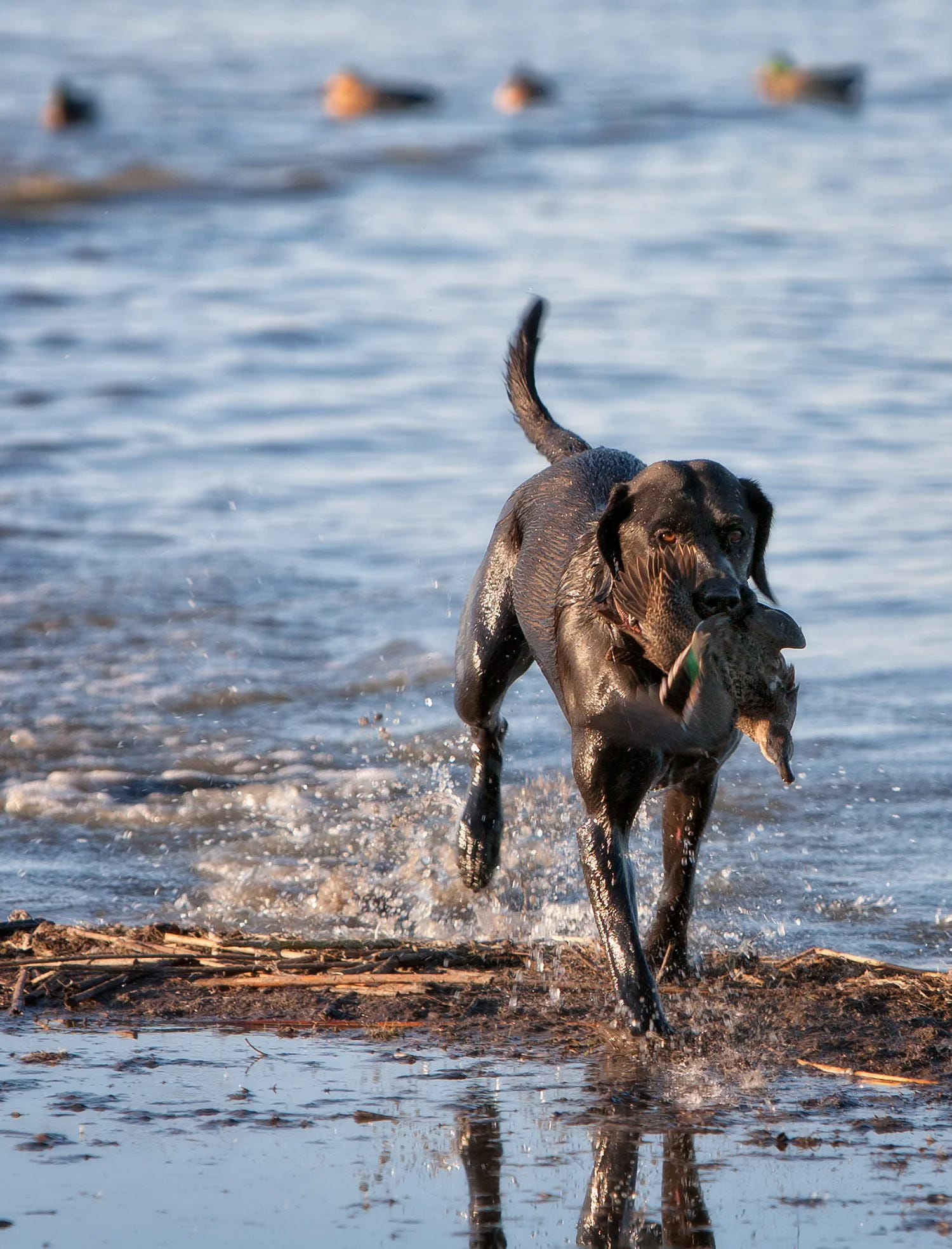
Maizee was a spectacular companion, and not just for her owner Dennis. She came to the photo studio daily once her human opened his own space—and she was my good friend too. Over the years of working in commercial studios I’ve experienced lots of beloved visitors—from the tiny terrier who loved balloons to the spaniel who regularly sported seasonal sweaters—but my favorite was the ever elegant Maizee. Who never sniffed out the kitchen garbage or got under foot. And she became a constant presence. In her senior years she was part of every shoot, as we shot the photos for our guidebook/cookbook, Untamed Mushrooms. Often late in the day or early in the morning—whenever our co-author, wild mushroom guru Michael, brought us a cache of whatever he foraged. Maizee just flopped down onto her cushy bed, close to the set. In the end, we dedicated the book to her.
In addition to her studio duties, Maizee was Dennis’ bird hunting sidekick—performing the task she was born to. Several years ago we did a story (at our blog 2fish1dish) about fall hunting & Dennis’ passion for smoking the birds he brought home. It’s worth revisiting, along with a duck breast recipe from Untamed Mushrooms. Maizee was part of it all, bringing the birds to her master out in the field & keeping me company in the studio kitchen. She’s gone now & is very much missed. But we love Bella, Dennis’ current pup.
I wonder if because our state license plates declare we’re the “Land of 10,000 Lakes” it makes it so? In fact we actually have nearly 12,000 lakes, but who’s counting? No matter the number, there’s no disputing that it’s hard to drive anywhere in the range of our backyard without stumbling into a lake, pond, or marshy slough. And every one is a mecca for water birds, from our favorite common loons and Trumpeter swans to an astonishing array of ducks and geese. And as the sun shifts and autumn brings a chill to the air, the annual migration of tens of thousands of waterfowl from the very northern climes of Canada down through the flyways of the northern plains begins. Signaling the start of bird hunting season, a tradition in so many families including our own. I didn’t grow up in a hunting family, but marrying into one has taught me so much about the philosophies around habitat preservation and the nurturing and respect of humans for our feathered neighbors.
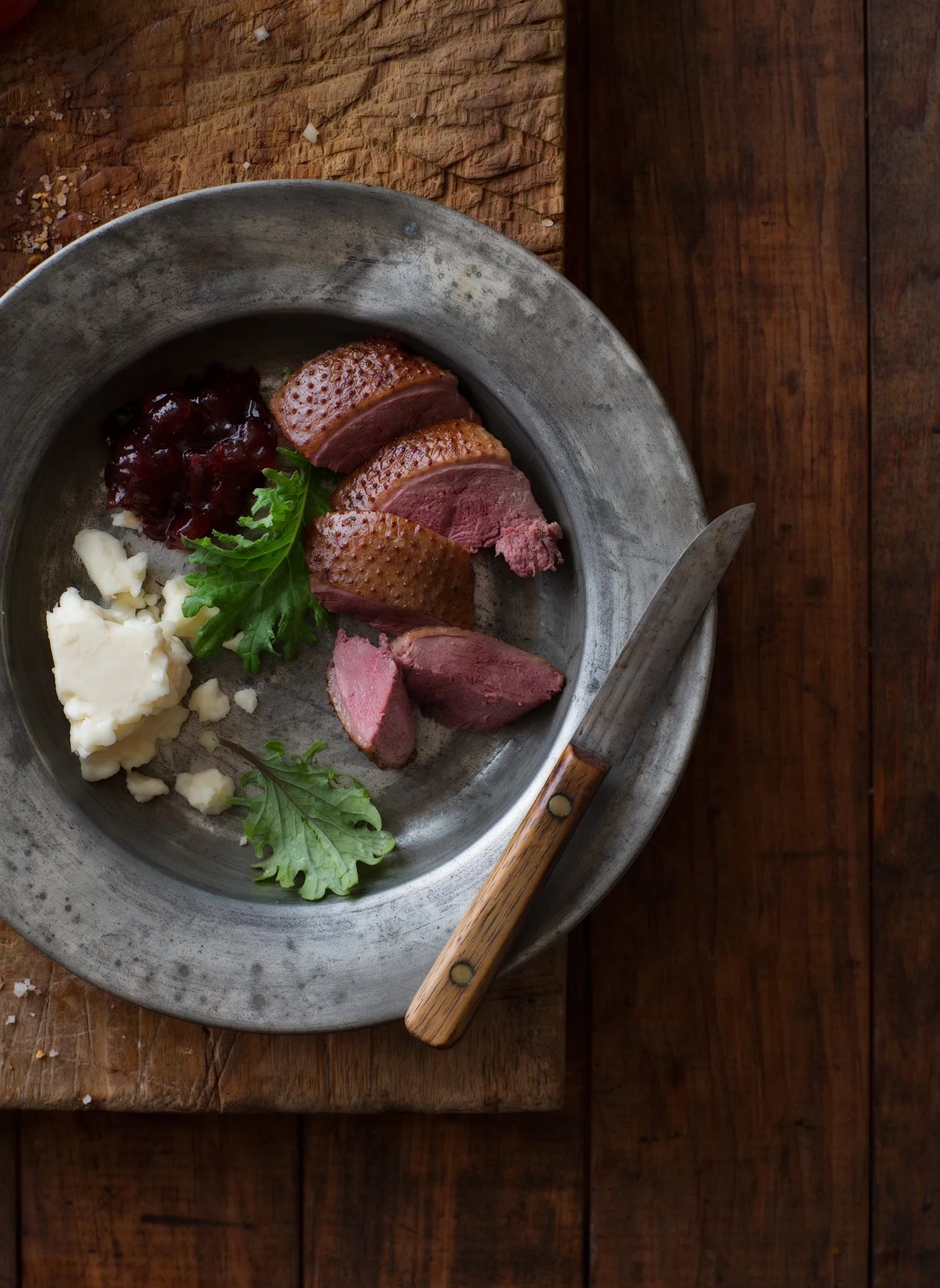
Part of the respect inherent in the hunting of wild birds is the final appreciation of them in our kitchen—or out on the patio. Ducks in particular, from homey slow-cooked stews to quickly seared and elegantly glazed breasts, make for irresistible eating. But a favored method of patiently preparing duck for the table is in a smoker. This isn’t instant gratification duck camp cuisine, but it’s well worth the wait. In Dennis’ backyard a low-tech metal cylinder belches out plumes of fragrant smoke within hours of his return from a hunt in Canada.
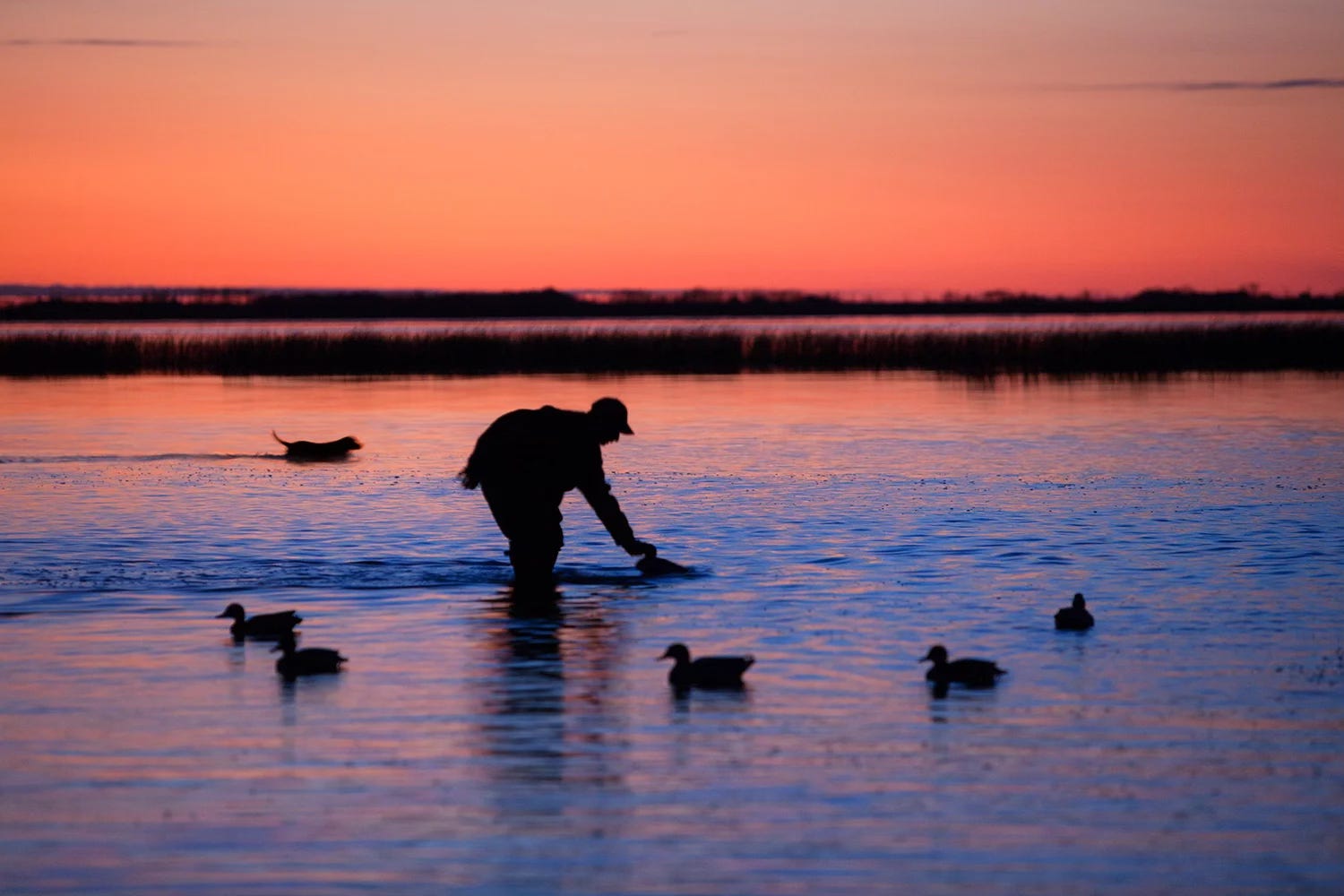
As ducks begin their long flight south, the skies are filled with a seemingly never-ending stream of waterfowl. Consulting migration reports, and these days getting e-mail alerts and using mobile apps, avid hunters are ready—with decoys packed.
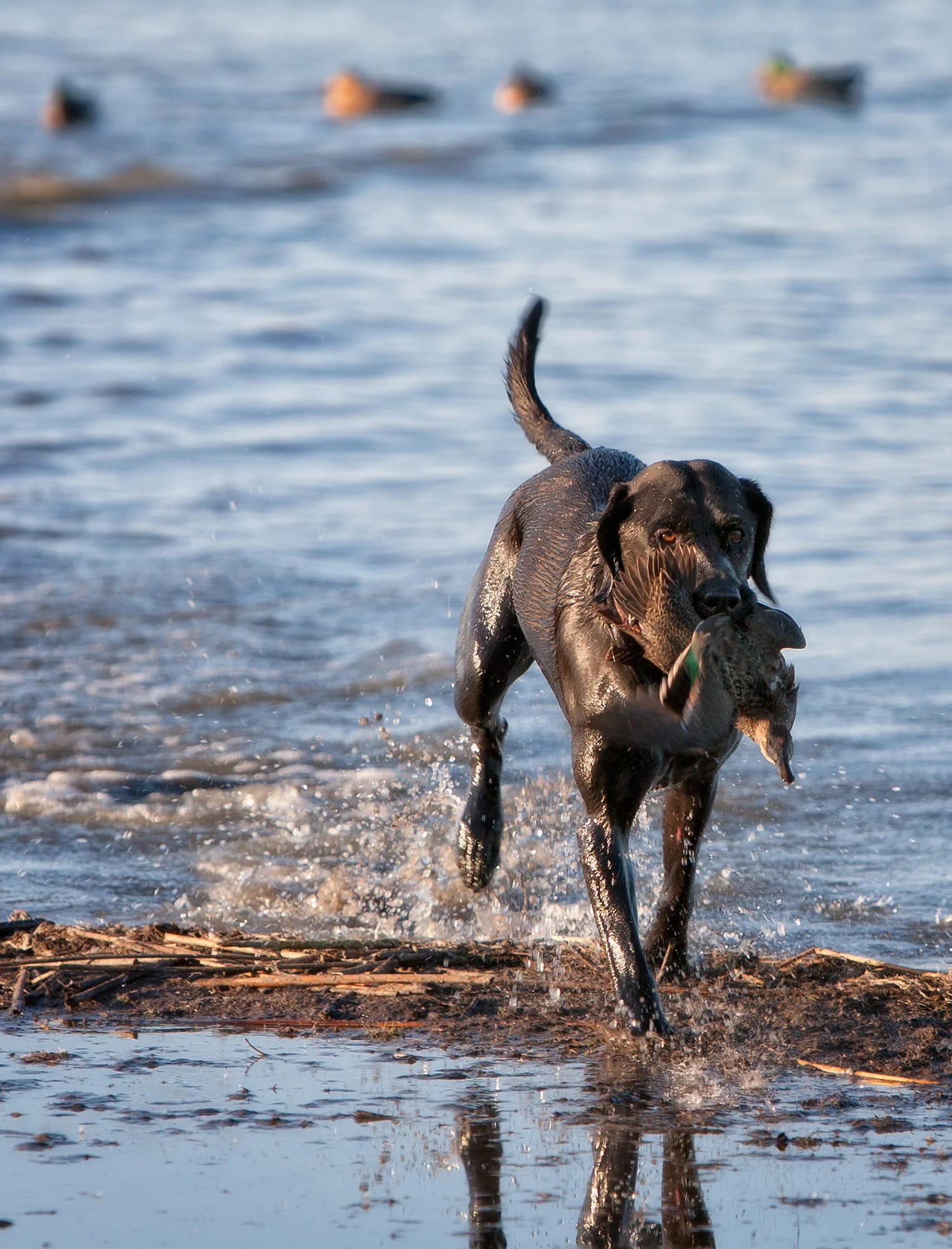
A well-trained retriever is commonly thought to be a waterfowl hunter’s most important partner. Maizee, Dennis’ Labrador, lives for hunting and probably enjoys a foray out into the field more than anyone. A good hunting dog frees a hunter from potentially dangerous wades into cold water to find a downed bird and a retriever’s acute sense of smell guides them to wounded birds hidden in swamps or weed-filled marshes. Bringing along a good retriever is probably one of the best conservation tools a hunter can employ—it ensures that a higher percentage of birds are found and ultimately get to the table.
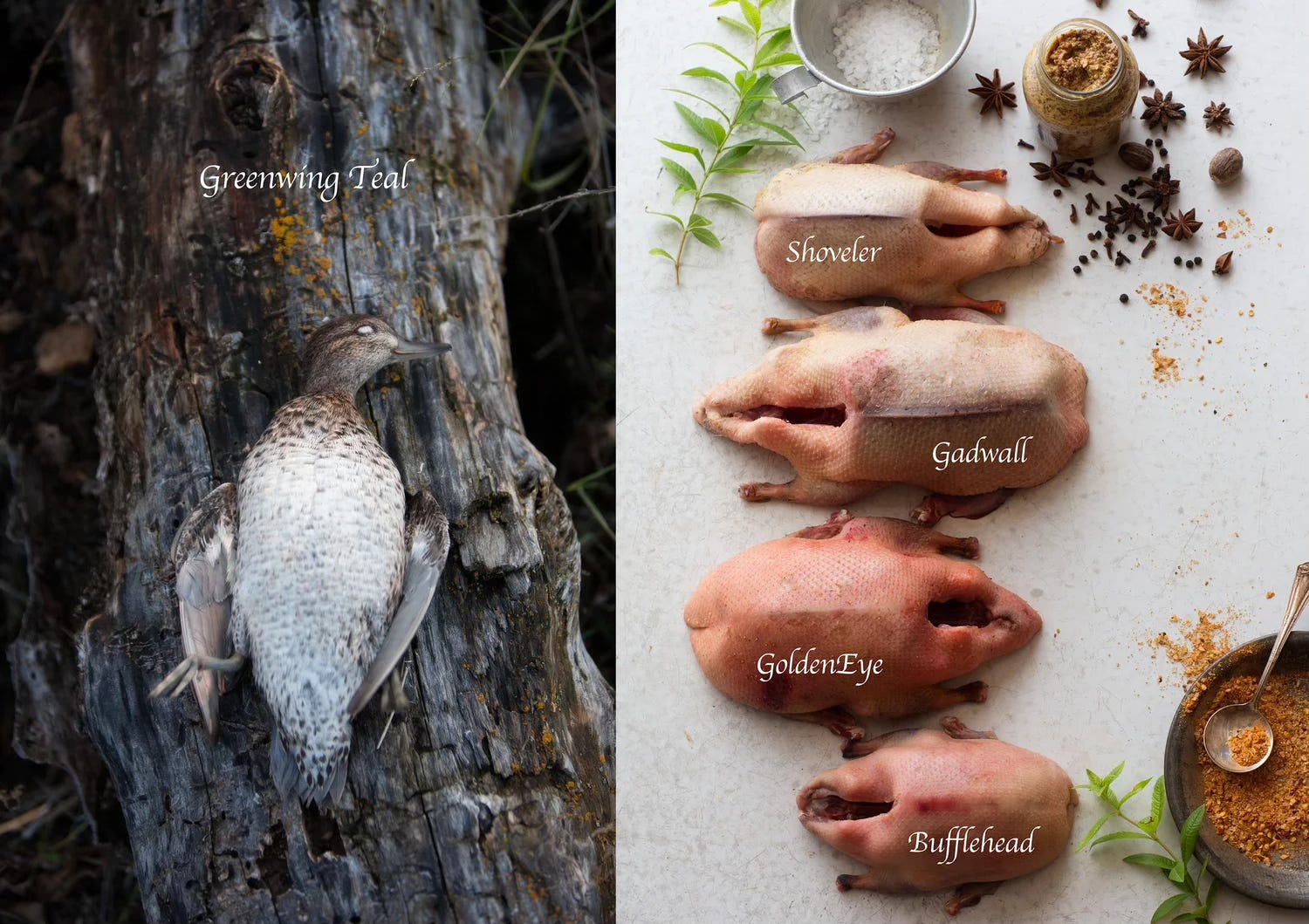
There are two basic types of ducks, puddle ducks (or dabbling ducks) and divers. Puddle ducks graze primarily on aquatic grasses or by tipping themselves up to nibble on plant matter just below the surface. Their legs are more centered under their bodies so they can easily waddle about on land, able to wander out onto open fields to eat grains, corn, or soybeans. While diving ducks are able to propel themselves several feet under the water with their shorter bodies, strong legs, and large feet—successfully fishing for water bound prey. But divers find walking on land a chore. Mallards, teals, shovelers, and gadwalls are all puddle ducks; while goldeneyes and buffleheads are divers. It’s common to find both types of duck in the same habitat but they’re rarely in competition since they are built to seek food in such different ways. And because their varied diets influence their flavor, discerning hunters and cooks may prefer one type of duck over another for eating.
Upon arriving home, field-dressed ducks are plucked and immersed in a salty brine. Dennis uses a commercial curing product that can be used dry or mixed with water and a generous amount of brown sugar, which adds some sweetness and boosts browning during the smoking process. A 24-hour chilled soak in the brine enhances the best flavor of the ducks and smooths out the taste of wildness that some eaters might object to.
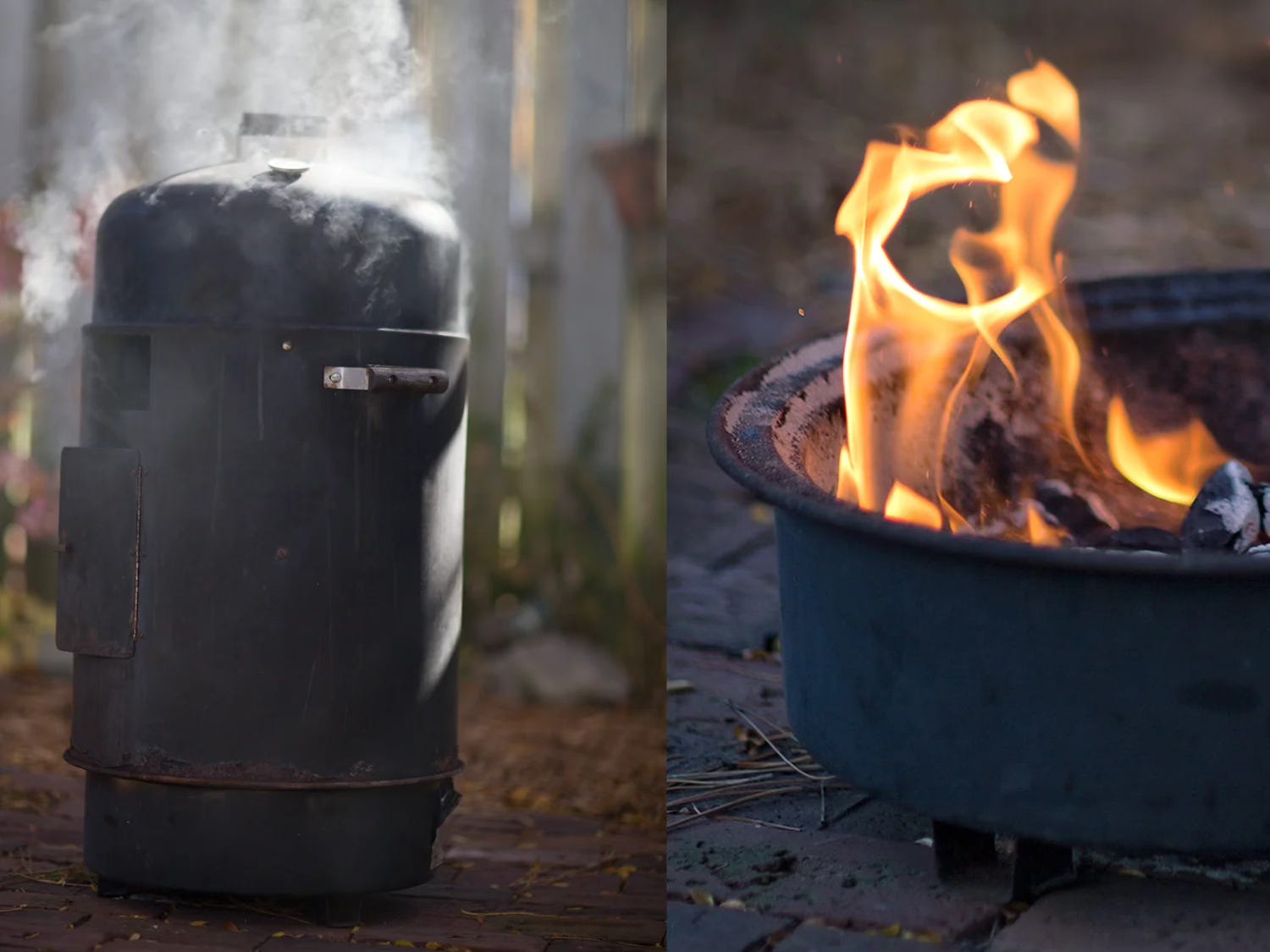
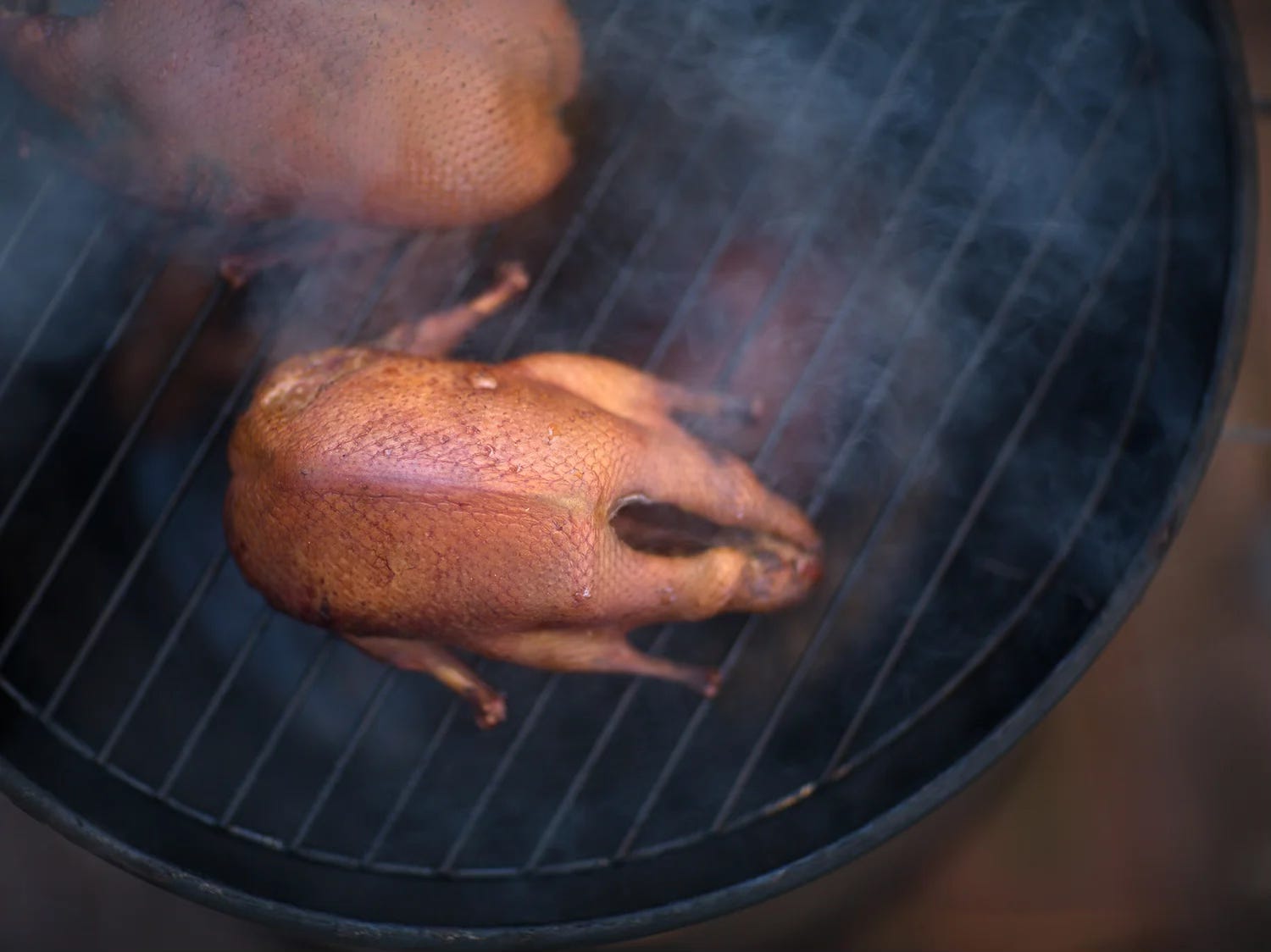
As the ducks are brining, Dennis also soaks large chunks of wood, mostly apple wood but sometimes including some cherry or hickory, in a bucket of water overnight. Once the ducks and wood are ready, he lights charcoal in the bottom of the smoker. When they’re covered with gray ash, he arranges the wet wood on top. As the wood begins to burn, he removes it and returns it to the bucket of water, adding more chunks of wet wood to the hot coals. This process creates smoke and regulates a constant low heat. Adding some ice to the water pan is another clever technique for keeping the temperature ultra-low so the birds continue to absorb the smoky flavor rather than just cooking through. After 4 to 5 hours of patient monitoring, the ducks develop a gorgeously mahogany hue that lacquers the skin while the interior meat is pink and tender with an intense smokiness. For crisper skin Dennis might finish the birds on a hot grill or slide them into a very hot oven for several minutes.
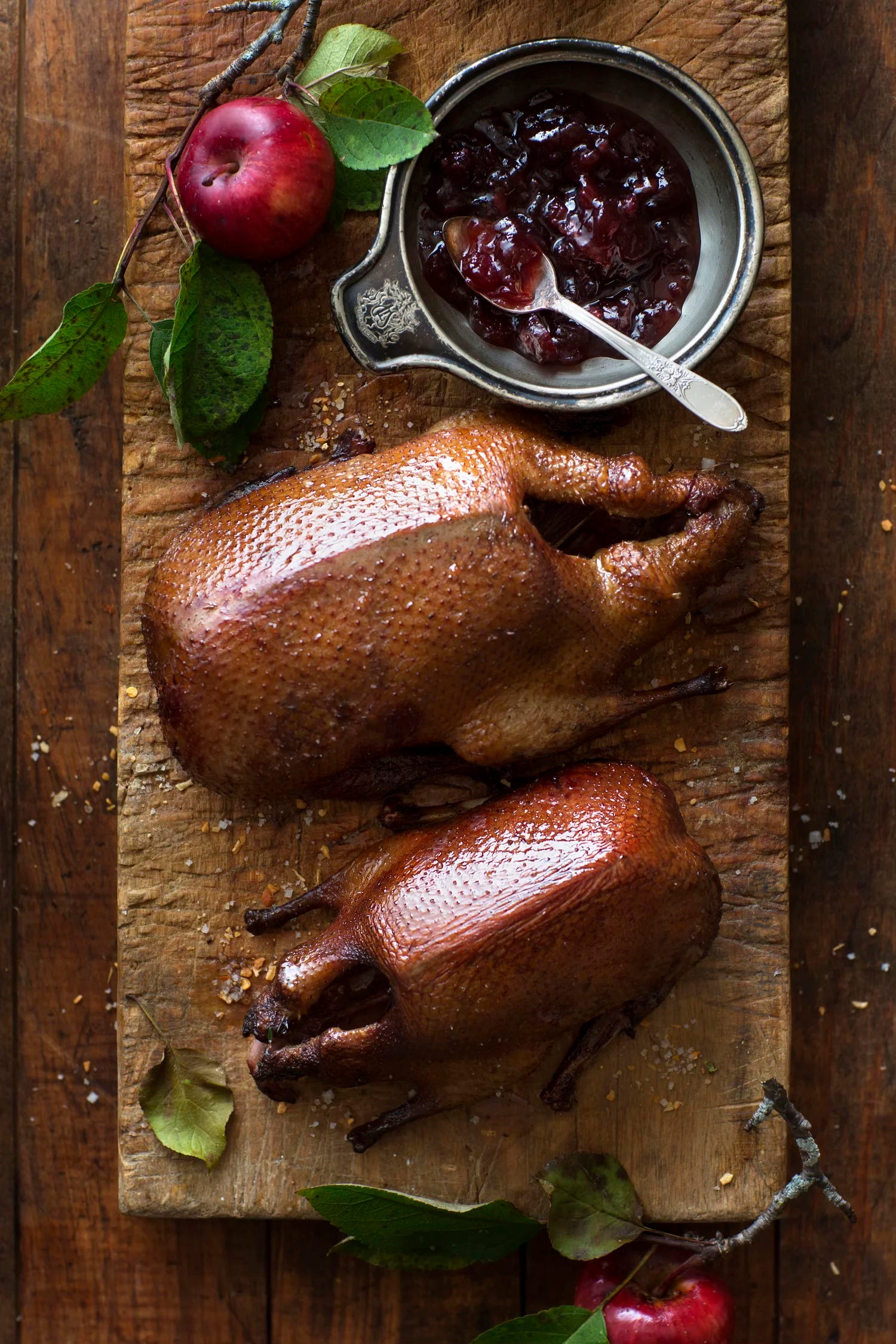
The rich flavor of smoked duck is a natural teamed with autumn fruits. My towering apple tree, with strong limbs weighed down by tartly sweet Haralsons, provides a bounty for both community deer and to fill jar upon canning jar of an almost savory apple-cranberry chutney that pairs neatly with tender slices of smoky duck, a tangy aged goat cheese or white cheddar, and a nice glass of French Calvados or tawny Port. Salut!
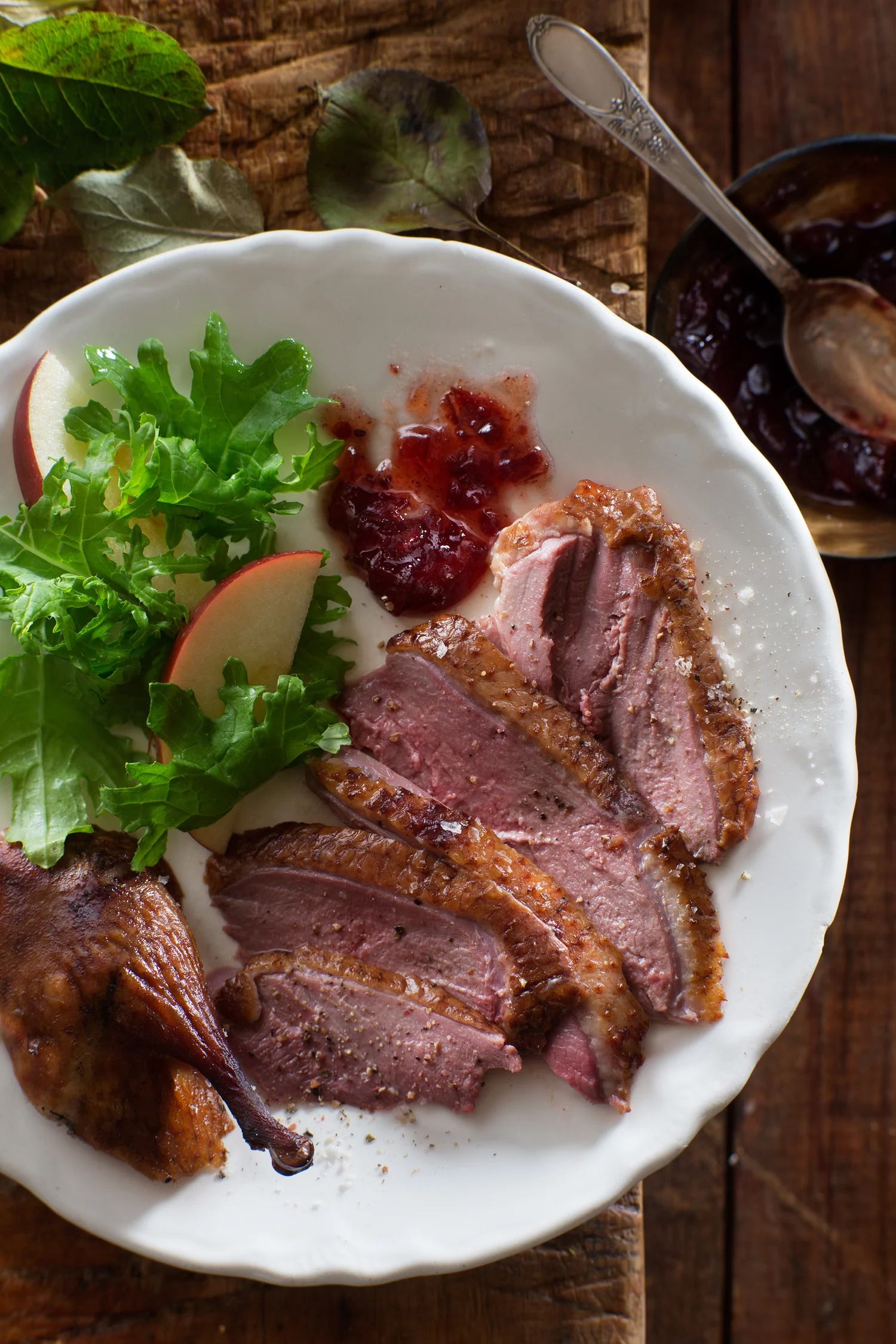
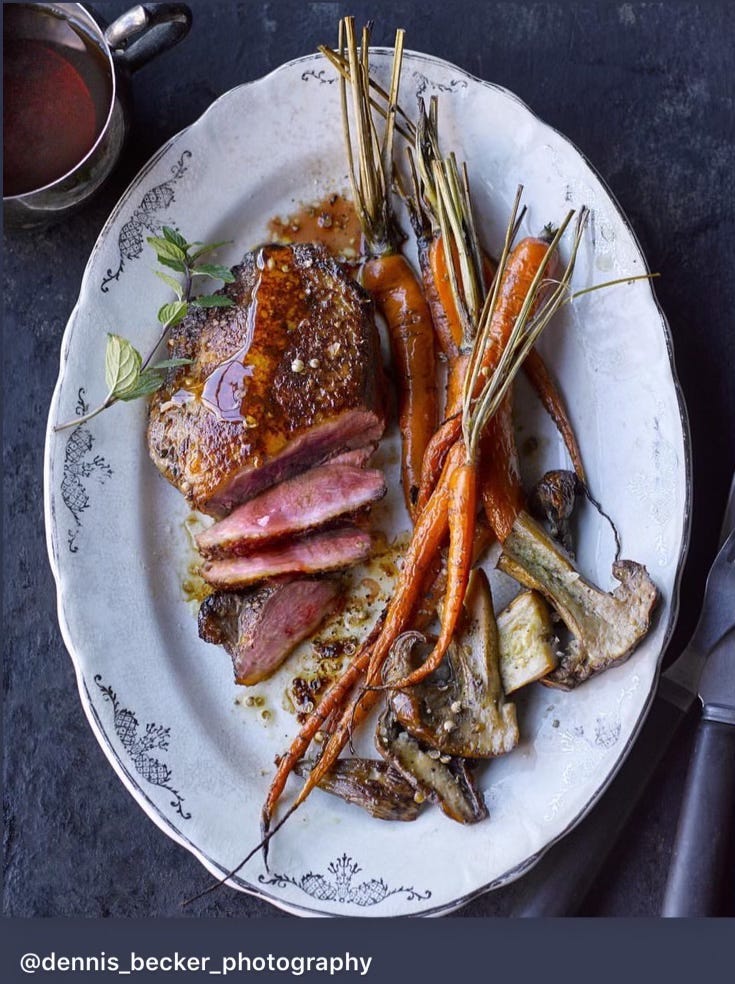
MAPLE & SPICE DUCK BREASTS with OVEN-CHARRED CÈPES & BABY CARROTS
Serves 4
This is beautiful with either wild or domestic duck breasts—well worth sourcing them for an autumn supper. Cèpe is the French word for the king boletes—and they’re as much a fall favorite in France as they are in Italy (porcini) or here. Duck breasts are wonderful with the sweet-spicy combination of maple and spices, sliced up medium-rare, with the richness of the mushrooms and natural sweetness of the roasted carrots.
INGREDIENTS
2 tablespoons maple sugar
½ smoked paprika
1 teaspoon ground coriander
¼ teaspoon ground smoked salt
2 juniper berries, coarsely ground
¼ cup olive oil, divided
4 large (about 1-1/2 lbs. total) duck breast halves (boneless, with skin)
¾ pound king bolete mushrooms, whole if small or halved
12 baby carrots with tops, trimmed and halved lengthwise
Coarse salt and freshly ground pepper to taste
Warm maple syrup to taste
1. Heat oven to 425˚F. Arrange the oven racks so you can slide in 2 baking sheets and a skillet. Mix the maple sugar, paprika, coriander, smoked salt, and juniper berries. Rub the duck with 1 tablespoon oil, then sprinkle on the seasoning blend.
2. Arrange carrots on a parchment-lined rimmed baking sheet. Spread mushrooms out on a second baking sheet. Drizzle carrots and mushrooms with 2 tablespoons oil; season with salt and pepper. Place pans in oven; roast for about 30 minutes or until tender and slightly charred around the edges.
3. Meanwhile, heat the remaining 1 tablespoon oil a heavy ovenproof skillet over medium-high. Sear the duck, giving it a nice golden color. Slip the skillet into the oven; roast for 10 minutes or until desired doneness.
4. Serve the duck, sliced, with the roasted mushrooms and carrots. Drizzle with a little maple syrup.

Another beautifully written and photographed. Lisa,Your work is amazing!
Love your food styling, Lisa!!