

Kitchen Parlor Tricks
The everyday magic of salt

A little book from 1838, titled Parlour Magic, offers over 350 party tricks to impress even the most skeptical audiences. They claim to be memorable & only deploy household items—leaning heavily on simple science.
Everyday magic…little tricks performed to impress an audience, can certainly be applied to the transformative power of salt.
I just taught a couple of workshops called Elemental Salt—a culinary topic that seemed to strike a cord in students looking for new food classes at North House Folk School. I’ve taught at North House for several years, focusing on wild mushroom foraging/cooking, pantry classes that explore food preservation, and recently a very sticky class all about honey in the kitchen. But salt is a theme that fascinates me, so I was glad to have a kitchen full of equally curious students. I lugged up pounds of salt from as many interesting sources as I could find, looking for as much variety as possible. We traversed the world of origins, processing, color, texture, and taste. Then experimented with all the attributes of salt—from food preservation to its ability to keep foods moist & tender. And discussed its true superpower, not only as a flavor enhancer but also its strength at releasing flavor compounds in other seasonings and ingredients. So much to analyze and try. Making a salt-crusted whole chicken made true believers of salt’s magic, with a deliciously juicy bird emerging from the broken crust.


Later, as I was doing a clean-up sweep (literally) through the kitchen after my first class was over, one of the school’s hard-working interns stopped in. And said he’d run into a group of my students who were excitedly talking about something cool we did with egg yolks—and he wanted in on it. I explained the curing we did—really a sort of party trick that made the rounds of social platforms several years ago. I’d filed the idea away then and was glad to pull it out to wow my class. I started a dozen yolks in their salt-sugar cure ahead of class. The cure pulls the moisture from the yolks—it takes about 5 days in the fridge—so they were ready to unearth & have a final drying out in a low oven (or one student suggested a dehydrator) so we could taste them. The firm, yellow pucks end up with a savory, umami-ish finish—a revelatory transformation of texture & taste. I’ve heard some compare them to aged cheese, but I think they’re just of themselves. Not sure it’s a trick I’ll do regularly, but it was fun to share.
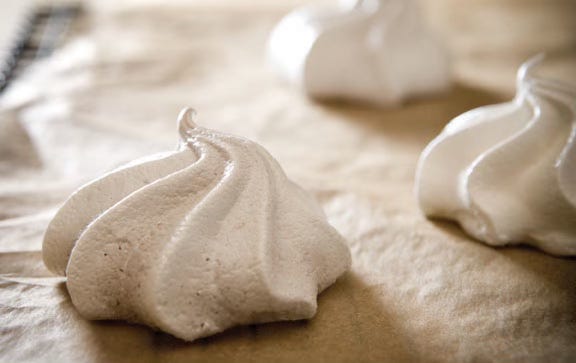
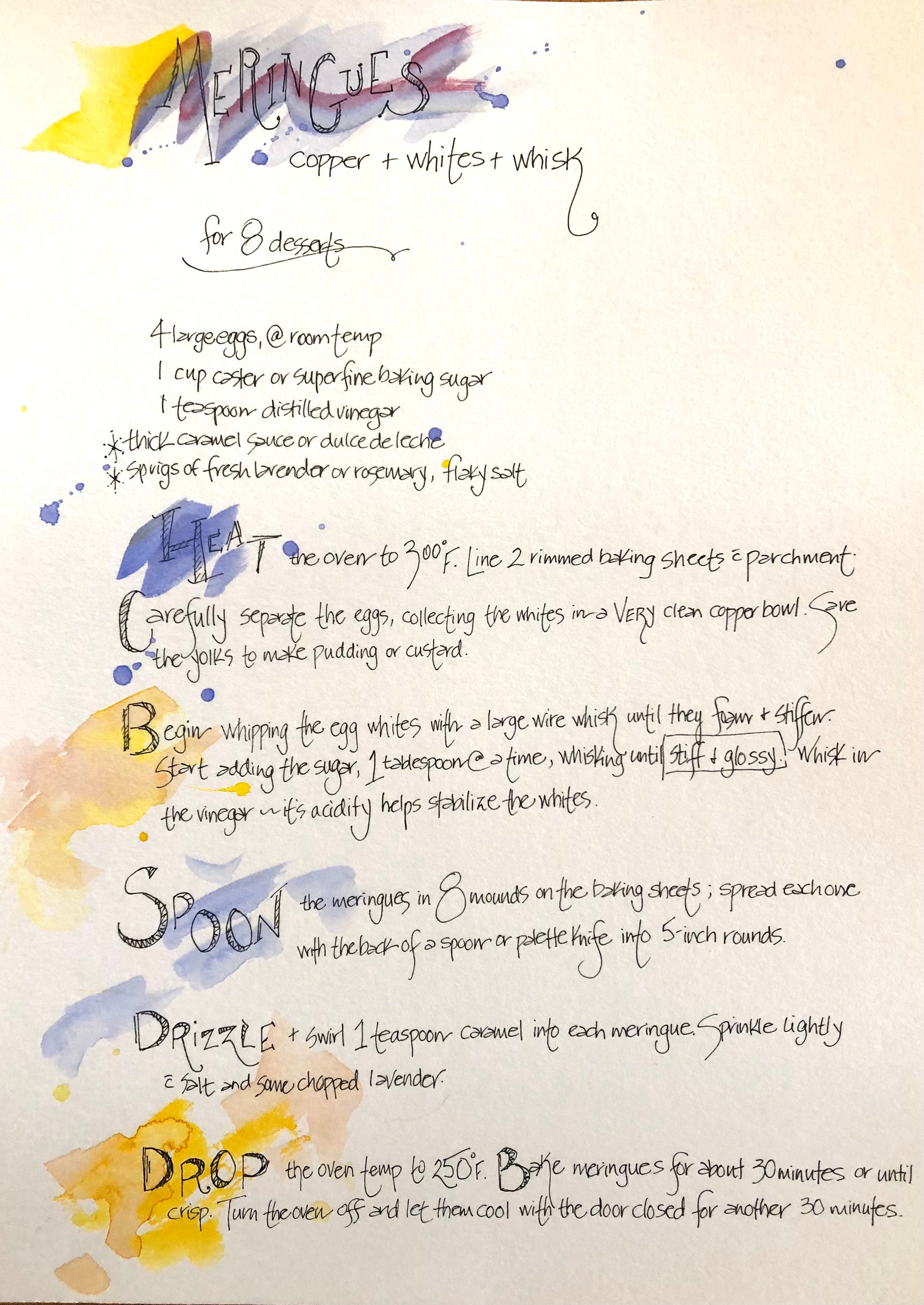
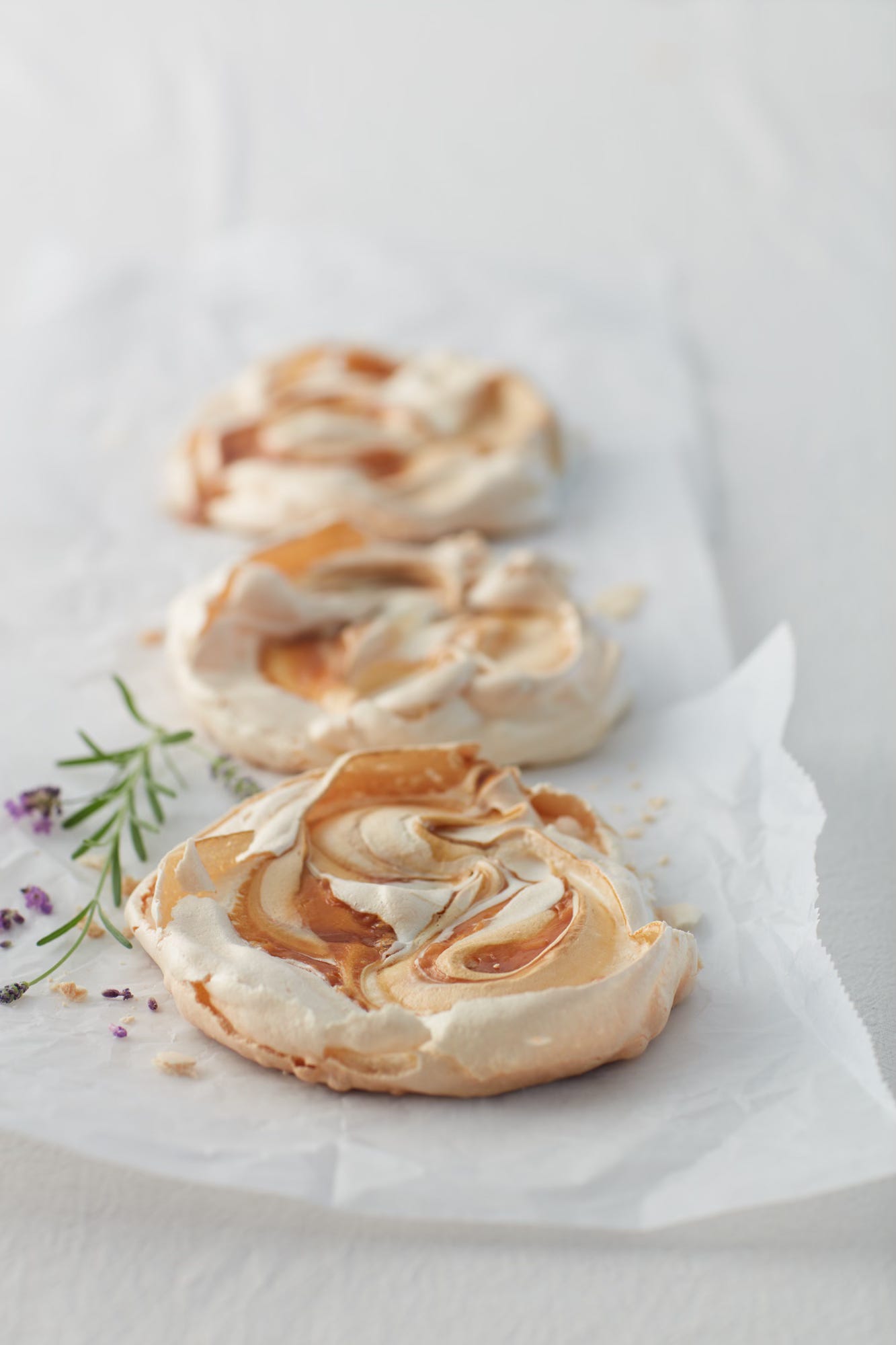
The intern also told me he’d started making his own mayo, so wondered what he could do with all the leftover egg whites. I often freeze them till I have a need—and all sorts of slow-baked meringues, from crisp, melt-in-your mouth cookies (or better yet, toasted coconut meringue cookies half-dipped in dark chocolate) to caramel-swirled meringue nests (see below, after you cure the yolks) make the “need” cut.
WINTER CAESAR SALAD w/ CURED EGG YOLKS
Makes 6 servings
The magic of curing egg yolks in salt & sugar is transformational. The firm texture and rich flavor is like a type of cheese—grate them over salad, into a risotto, over roasted vegetables, or on top of avocado toast. Here they join in the simple but bold flavors of a Caesar salad with bitter winter greens. Make crisp croûtes to serve alongside: thinly slice a crusty baguette, rub them with a clove of garlic and drizzle with olive oil. Griddle the slices until golden.
CURED EGG YOLKS
· 1-1/2 cups kosher salt
· 1-1/2 cups sugar
· 6 large eggs
SALAD
· 2 Romaine lettuce hearts or 4 cups baby kale leaves
· 1 small head radicchio
· 2 Belgian endive
DRESSING
· ½ cup organic mayonnaise
· 1 small clove garlic, finely chopped
· 1 anchovy fillet, finely chopped (or ½ teaspoon anchovy paste)
· 2 tablespoons lemon juice
· 1 teaspoon Dijon mustard
· Coarse salt and freshly ground pepper to taste
· Shaved parmesan cheese, if you’d like
DIRECTIONS
1. To make the eggs: mix the salt and sugar together. Pour half of the mixture into an 8x8-inch pan. Make 6 indentations with the back of a spoon.
2. Separate the eggs (reserve the whites for the meringues below); carefully drop the yolks into the indentations in the salt-sugar mixture. Spoon the rest of the salt-sugar mix over the yolks.
3. Tightly cover the pan with plastic wrap. Place it in the refrigerator to cure for 5 days or until the yolks feel firm and dry.
4. Heat the oven to 150°F. Gently brush off the yolks and wipe with a damp towel. Place the yolks on a baking sheet and finish drying them out in the low oven for about an hour or until very dry. Store airtight in the refrigerator for up to 1 month.
5. To make the salad & dressing: tear the lettuces into large pieces and place in a bowl. Mix all the dressing ingredients (except for the parmesan) in a small bowl until well blended, stirring in a bit of lemon juice or water if you’d like a thinner dressing. Arrange greens on plates, drizzle with dressing. Garnish with sliced or grated cured egg yolks, freshly ground pepper, and parmesan cheese.


The lovely part of making meringues with egg whites left from curing their yolks is that they will be pure—with no bits of broken yolk. The absolute first rules of making meringue are a scrupulously clean bowl and egg whites with no trace of yolk (fat is the bane of a meringue’s existence.) The effortless application of elbow grease to whip egg whites, after cleaning out a huge copper bowl with a scrub of coarse salt & vinegar, is one foundational skill I brought home from cooking school in France.
How many different salt sources are there in the world? Do they taste extremely different? Michael likes to roll a potato in salt before he puts it in the oven to bake. :)
You should Joyce—easy & fun. This time of year, pair with some caramelized pears😊